
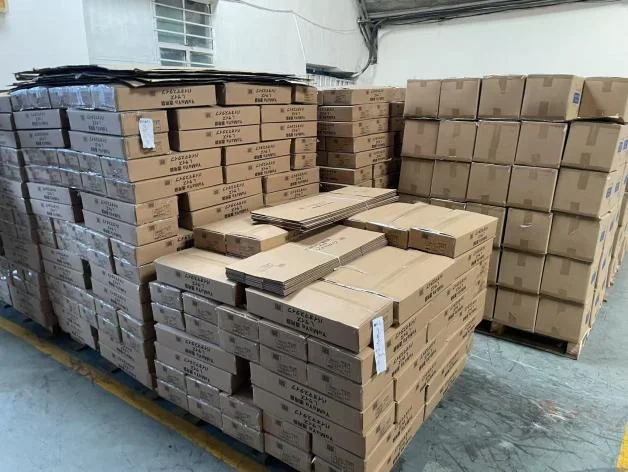
1. What Are Municipal Designated Waste Bags?
The Designated Bag System
Many municipalities use a designated bag system for waste collection, where residents must purchase and use officially specified bags for their garbage. The bag price includes the waste disposal fee, creating a 'pay-as-you-throw' system that incentivizes waste reduction and proper sorting. Designated bags also standardize waste packaging for efficient collection and processing.
Why Standards Matter
Standardized specifications ensure that designated bags perform reliably in the waste collection system. Bags that are too thin break during collection, creating litter and operational problems. Incorrect colors cause sorting errors. Poor printing leads to counterfeiting and lost revenue. Consistent quality is essential for the proper functioning of the entire waste management system.
Typical Application Scenarios
Designated waste bags are used in residential areas, commercial buildings, public spaces, and office buildings. Municipalities typically produce different sizes and colors for different waste categories - burnable, non-burnable, recyclables, and hazardous waste. The system works best when all bags are manufactured to consistent, reliable standards.
2. Key Standard Requirements
Material Specifications
Municipal waste bags must be made from specified grades of virgin polyethylene - typically HDPE or LLDPE depending on the municipality's requirements. Recycled materials are generally not permitted because they can introduce variability in strength and quality. The material must meet food-contact or industrial safety standards, be free from harmful substances, and have no offensive odors.
Thickness and Dimensional Standards
Each municipality specifies exact dimensions and minimum thickness for every bag size (typically 10L, 20L, 30L, 45L, 60L, 80L, 120L). Thickness requirements generally range from 0.015mm to 0.03mm depending on the size and intended use. Thickness tolerance is usually set at ±10% or tighter. Dimensions must be consistent to ensure proper fit with standard collection equipment and bin sizes.
Color Standards
Color coding is essential for waste classification. Each waste type has a designated color - typically blue or green for recyclables, red for hazardous, gray or black for general waste, and brown or green for organic waste. Color consistency is critically important; significant batch-to-batch variation makes sorting unreliable. Most municipalities specify colors using Pantone or other standardized color reference systems.
Printing Requirements
Designated bags must include specific printed information such as the municipality name, waste category, capacity, usage instructions, and sometimes anti-counterfeiting features. Print position, size, color, and legibility are all specified. The printing ink must be durable enough to withstand handling without smudging or transferring, and must meet safety standards for food contact if applicable.
Strength and Performance Standards
Municipal bags must meet specific physical performance standards including tensile strength, elongation, impact resistance (drop test), and seal strength. These standards ensure the bags can withstand normal use - being filled, tied, lifted, and transported - without failing. Testing methods and acceptance criteria are defined in the municipal specifications.
3. Manufacturing Quality Control Points
Raw Material Control
Quality control starts with incoming raw materials. Virgin PE resin must come from approved suppliers and meet specified melt index and density requirements. Each batch of raw material is tested upon receipt to verify it meets specifications. Color masterbatch must also come from reliable suppliers to ensure consistent color quality and dispersion quality. Any material substitution or adulteration will immediately show up as quality problems in the finished product.
Film Extrusion Process Control
The blown film extrusion process determines film thickness uniformity and physical properties. Operators carefully control extrusion temperature, pressure, blow-up ratio, haul-off speed, and cooling airflow to produce consistent film thickness. Continuous thickness monitoring systems measure the film at multiple points around the bubble, and operators adjust process parameters in real time to stay within tolerance. High-quality extrusion lines can maintain thickness within ±5% variation.
Printing Process Control
Printing requires precise registration and consistent color matching. Before each production run, printers set up the press using approved color standards and artwork proofs. During production, they continuously monitor print quality, checking for registration errors, ink density variations, smudging, and defects. Each printed roll undergoes first-article inspection and periodic sampling throughout the run. Color consistency is verified using densitometers or spectrophotometers.
Bag Converting Process
The bag-making (converting) process forms the bags and creates the seals. Operators carefully control seal temperature, pressure, and dwell time to ensure strong, consistent seals. Cut length accuracy is also monitored to maintain correct bag dimensions. Seal strength testing is performed regularly during production to verify seals meet the minimum strength requirements.
Final Inspection
Finished goods undergo a final quality inspection before packaging and shipment. This includes visual inspection for appearance defects, dimensional checks, thickness measurement, print verification, and seal inspection. Critical performance tests may also be performed on a sampling basis. Any bags failing inspection are rejected and either reworked or scrapped.
4. Key Testing Methods
Thickness Measurement
Thickness is the most fundamental quality parameter. Film thickness is measured using a micrometer or thickness gauge at multiple points across the width and along the length of the film. Multiple measurements are averaged to determine mean thickness, and variation is calculated to verify uniformity. Both average thickness and minimum thickness are important - a thin spot is where failures occur.
Tensile Strength and Elongation
Tensile testing measures the force required to pull a film specimen apart and how much it stretches before breaking. A universal testing machine pulls standardized specimens at a controlled rate while recording force and extension. Tensile strength at yield, tensile strength at break, and elongation at break are all reported. These tests characterize the film's mechanical properties and verify they meet specified standards.
Drop Impact Test
The drop test simulates real-world handling by dropping a filled bag from a specified height and checking whether it breaks. This is one of the most practical performance tests because it evaluates the bag's overall performance including film strength, seal strength, and impact resistance. Different municipalities specify different drop heights and weights based on bag size and intended use.
Seal Strength Test
Seal strength testing measures the force required to peel apart a sealed joint. Weak seals are one of the most common failure modes in garbage bags, so ensuring adequate seal strength is critical. The test involves pulling apart a seal specimen in a tensile tester at a specified rate and recording the peak force. Both the strength value and the failure mode (peel vs. break) provide important information about seal quality.
Color Measurement
Color accuracy is verified using a spectrophotometer or colorimeter that measures color difference (Delta E) between the production sample and the approved standard. A Delta E value below 2 is generally considered acceptable for most applications. Tighter standards may apply for municipal bags where color-coding is critical for waste sorting accuracy.
5. What to Look for in a Municipal Bag Supplier
Established Quality Management System
Look for a supplier with a formal quality management system, preferably ISO 9001 certified. A structured approach to quality - with documented procedures, inspection records, and continuous improvement processes - is essential for producing consistent, specification-compliant municipal bags. Ask to see quality documentation and inspection records.
Modern Production Equipment
The precision and capability of production equipment directly affect product quality. Modern extrusion lines with automatic thickness control, high-precision printing presses with register control, and automated bag-making machines all contribute to consistent quality. Well-maintained equipment is also important - old or poorly maintained machinery produces more defects.
Proven Experience and Track Record
Municipal bag production requires specific expertise. A manufacturer with years of experience producing designated waste bags for multiple municipalities understands the requirements and challenges better than a general-purpose bag factory. Ask about current and past municipal clients, how long they've been producing this type of product, and what percentage of their business is municipal bags.
Reliable Supply Capacity
Municipalities need consistent, reliable supply - stock-outs are not acceptable. Verify that the supplier has sufficient production capacity to meet your volume requirements, including the ability to handle seasonal demand spikes. A reliable supplier should have multiple production lines, adequate raw material inventory, and contingency plans for equipment failures or other disruptions.